From Clean to Expressive
How Branding Shifted from 2016 to 2026
There was a moment when branding felt very quiet.
Especially in wellness and early DTC, everything went clean. Neutral palettes. Simple type. Lots of white space. Perfect studio photos. Nothing extra. Nothing loud.
It was not just a design trend. It was a signal.
Clean branding said, we are transparent, we are simple, we are science-backed. And for the time, that message mattered.
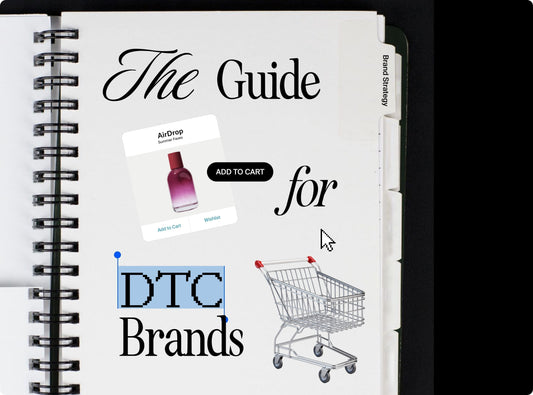
Fast forward to 2026 and branding looks very different. It feels layered, expressive, nostalgic, and lived in. Products are no longer floating in white voids. They live in real environments. Visuals feel human. Sometimes even a little messy.
This shift did not happen by accident. It happened because culture changed.
If you are building or refreshing a brand today, understanding why this happened is just as important as knowing what looks good right now.
When Minimalism Built Trust
Let’s rewind to the mid 2010s.
Wellness brands were still earning legitimacy. DTC was still new. Consumers were skeptical and wanted proof before buying anything online.
Minimal branding did a lot of heavy lifting.
Clean layouts and stripped back visuals helped brands communicate:
- ingredient transparency
- simplicity
- science and credibility
Less visual noise made brands feel serious and trustworthy. Clean did not mean boring. It meant intentional.
Minimalism helped brands be taken seriously.
Now personality helps them be remembered.
Proof in Practice
Watching a Brand Evolve
Athletic Greens is a clear example of how this played out.
Early on, the brand leaned functional and straightforward. As the category matured, the visual system became cleaner, more refined, and more clinical. That evolution matched a growing need for authority and trust.
The shift was not only visual.
Over time, Athletic Greens became AG1. The shorter, more scientific name helped reposition the product from a niche greens powder for athletes to a foundational nutrition product for everyday life.
Design and naming worked together. Minimalism supported clarity. Simplicity supported credibility.
This was minimalism as strategy, not aesthetics.
When “Authentic” Started to Feel Generic
Here is the thing about design that works really well.
Everyone copies it.
As more brands adopted the same clean look, minimalism slowly stopped being a differentiator. What once felt intentional began to feel expected.
Authenticity started to look curated. Familiar. Formulaic.
When everything looks clean and honest, nothing actually feels personal.
That is usually when culture starts craving something else.
Enter 2026
Branding Gets Expressive
Today, branding feels much more lived in.
Perfect bathroom cabinets gave way to intentionally messy get-ready-with-me sinks. Expression replaced perfection.
Visually, brands are leaning into:
- layered compositions
- texture and grain
- collage and analog references
- bold typography and playful copy
This is not chaos for chaos’ sake. It is personality showing up on purpose.
The goal is no longer perfection. The goal is connection.
Launching in a New Era
Juiced by Grüns is a great example of what launching looks like now.
From day one, the brand leads with expression. The visuals feel retro and nostalgic. The copy is bold. The colors are saturated. The layouts feel layered and alive.
Instead of stripping everything back, Juiced builds a full brand world. Packaging, content, and lifestyle imagery work together to create something that feels playful, confident, and human.
This is a very different approach than brands that evolved into minimalism. It reflects a different cultural moment and different expectations from consumers.
Same category. Completely different starting point.
2016 branding focused on proving credibility.
2026 branding focuses on showing who it’s for.
So What Actually Changed
2016 branding focused on proving credibility.
2026 branding focuses on expressing identity.
Both approaches can work. They just serve different moments.
The mistake is assuming one aesthetic is universally right.
What This Means for Your Brand
If you are building or refreshing a brand today, ask yourself this.
Are you trying to prove something or express something?
Do you need to earn trust through clarity and restraint, or build connection through personality and presence?
Clean branding helped brands be taken seriously.
Expressive branding helps brands be remembered.
Minimal design still has a place. Expressive design does too. What matters is choosing intentionally based on the cultural moment you are entering, not just what is trending.
Design always follows culture. Not the other way around.